Blog Keywords

Popular Posts for the Month

Wednesday, November 17, 2010

Zuiko and Beef Rendang

.

Today is Eid Adha, the celebration of sacrifice and performing hajj in Mecca. In this land of gastronomic paradise, feasting is very essential to complete the celebration. Traditionally, the rendang dish is synonym to the Eid festivities, be it Adha (sacrifice) or Fitri (rebirth).

For this year, I have decided to make beef rendang - after learning that my in-law is making chicken rendang. A quick rush after work Tuesday to get the essential ingredients ready, I worked on the cooking later in the evening.

For starters, rendang is one of the signature dish in the Malay cuisine. It's the festivities food. A must for big occasions. It is a very rich dish comprising mainly on the meat, coconuts (lots of them), seed spice, root spice and leaf spice. The preparation time is tedious as the amount of ingredients range from fresh to pre-processed sources. For the authentic rendang lover, all of the pre-processed ingredients are made fresh prior to cooking (which significantly extends the tediousness of preparing this magnificent dish).

E-30 with Zuiko Digital ED50mm F2.0
Beef Rendang with Rice Ketupat

I decided that 800g of meat, cut into bite-sized cutlets should be enough for the feasting of 6-8 adults. The coconut was freshly grated at the nearby shop, and I pressed about 600ml of it with a cup of warm water. After a few straining to separate the spent coconut flesh, the thick coconut milk (santan pekat) was ready.

Next came the root spice preparation. I used about 20 shallots to 5 garlic pieces, 6 inches of ginger (halia) with 5 inches of galangal (lengkuas) and 6 stalks of lemon grass (serai). All of these aromatics were pureed with a dash of warm water to make a paste.

Then, the seed spice was prepared. About a tablespoon of coriander seed (ketumbar), 50g dry chili (to boil) and a tablespoon of curry mix. All these were pureed with warm water to make a paste.

Finally, the leaf spice. I used 4 large size tumeric leaves (daun kunyit) and 10 kaffir lime leaves (daun limau purut). These were finely sliced into strips of roughly 2mm. The leaves were supposed to "dissolve" in the rendang.

Heat a half cup of oil in the wok, and sautee the root and seed spice. I continued stirring until the aroma started to permeate, and then I watched the heat so that the concoction wouldn't burn. I added 4 table spoons of brown sugar to sweeten the mix and let it caramelize. Then, I put in the coconut milk and beef, lowered the heat, and closed the wok. I let it simmer slowly for about an hour until the beef absorbed all the spicy goodness through the coconut milk.

Then, I put in a tablespoon of tamarind paste to counterbalance the sweetness. Finally, I added in the leaf spice and coconut paste (kerisik). Now, what makes a rendang a "true rendang" is the quality of the kerisik. What is so special about it? Well, it adds the extra dimension to the richness of the rendang. The kerisik is the soul of the rendang. It adds texture, taste and color to the rendang.

What is kerisik? Simply put, is toasted grated coconut pounded into paste. The finer the grate, the finer the texture and more even the toasting. The taste is richer, too. Once toasted, the coconut is pounded with a pestle and mortar until the texture is very fine and the oil starts to appear. The darker the toast, the more tart the kerisik will be. I am from the southern part of Malaysia, where prefer the kerisik to be a bit lighter. The northern part tends to have a more strong tasting kerisik; thus, darker rendang. To make kerisik from scratch takes about an hour from one coconut fruit.

Once I put the kerisik, the rendang was nearly ready. All it needed was the salt seasoning, and the final frying to make the gravy drier (the drier the rendang, the longer it will last without refrigeration). Then, I pair it with another traditional food; the ketupat (rice cake encased in coconut leaves). Personally, I prefer to have the ketupat with glutinous rice, which is much richer in taste as it is cooked and sauteed in coconut milk.

What can I say? This combination is full of good helpings of trans-fat and cholesterol. So, just watch the waist and blood pressure, and all should be fine. Just don't over-indulge, which is very difficult with such a succulent tasting dish!!!

Bon-a-petite....

Sunday, October 24, 2010

Zuiko and Char Kuay Teow

.

Malaysia, the melting pot of cuisine.

For hundreds of years the region has seen many fusion of cooking from the many traders that landed port in Malacca, Penang and Singapore. The root and leafy fragrant spices of the Malays archipelago, the elegance of Chinese cuisine and the wholesome seed spices of India fuse together to bring out the best in taste and aroma!

The typical Malaysian food that range from Nasi Lemak, Char Kuay Teow, various types of Laksa, Satay and many more fusion foods have made this country a haven for gastronomic aficianados. For me, I am not that really affectionate about the best food , but I appreciate the comfort of having great delicious food when it matters. Be it alone or with friends & family, food is the common bond between the many races in this country.

50mm, f/8, 1/100s, ISO1250

One of my all-time favorite foods to cook is the Char Kuay Teow. I have learnt to cook this comforting delicacy from my mother, later refined by observing the many hawkers' techniques to get the best recipe to suit my taste.


50mm, f/8, 1/8s, ISO2000

I usually cook it on Sunday mornings, just after getting the freshest of ingredients from the weekly Pasar Tani (Farmer's Market in literal translation). The basic ingredients are three servings of kuay teow (I like to get the finer noodles about 1cm thick), one medium onions, four pieces of garlic, six pieces of dried chili, a dozen prawns, two eggs, a couple of fish cake sticks, a handful of chives and two dollops of kicap pekat (thick soy sauce). Traditionally, the cockle is used instead of fish cakes. Somehow, I don't have the liking of cockles; thus, the change in recipe.

*Interestingly, the word Ketchup has its roots from the kicap.

Clean and de-vein the prawns and save the shells to make the stock. Blend the onions, garlic and chili; however, the dried chili needs to be boiled first. Sauté the paste in the wok with high heat until the aromatics of the blend permeates, and crack in the eggs. Stir roughly until the eggs harden, and pour in the prawn stock. Let it simmer then put in the kicap and the kuay teow along with the slivers of fish cakes and chops of chives. The secret in cooking this delicacy is by maintaining the high heat throughout and keeping the wok clean always. The molasses property of the kicap will cover the base of the wok, and having a sturdy metal spatula is very important to scrape it clean. Keep stirring and folding the kuay teow until there's some charred burning on the prawn, fish cake and the kuay teow. Finally, put two pinchfuls of salt for seasoning.


50mm, f/8, 1/125s, ISO2000

Whilst my adult Malay taste bud craves for a much spicier recipe, I have kids in mind. They wouldn't be ready to savor the typical Malay hot & spicy liking until they are much older. For now, I just put less chili and more kicap. My daughter definitely loves to eat this dish, sometimes she often reminds me to cook it. It's just a simple hawker's dish, which is definitely comforting.

Another tip, eat it immediately as it tastes the best piping hot!!


Saturday, October 23, 2010

Zuiko and Taking it Easy

.

Beautiful photography is within painless reach with the E-30!!!

Sometimes pictures turn out better when I take things easy. This was the case just this late afternoon when I took the time to photograph my youngest kid. Instead of thinking too technical about it, such as depth-of-field and noise, I took the liberty to set my E-30 to P-mode. Yes, P-mode with the ISO stuck at 800. I could have chosen 100 or 200 for better image quality, but somehow I want it to stay at 800.

To make things much simpler, I used the only prime lens I own; the Zuiko Digital ED50mm F2.0 Macro. This lens is known for its slow focus notoriety; mainly due to the lack of a focus limiter. What this means is that if I miss focus, the lens will scan through its range from 24cm to infinity. This will take ages in Auto Focus world, and most of the time will be such a pain shooting fast moving objects. Somehow, I did not bother about this fact. Though my kid was moving fast around the porch, I paced myself to track his movements wisely so that the lens won't feel useless, and won't take away the fun of shooting him.


What do you see, daddy?


The day was quite cloudy, with the shadows muted as if it's not there. He was running about the terracotta tiled porch playing at the gate and on the rattan chairs. My goal was to catch him at his many varied facial expressions and movements. With this lens, I was able to be around 5 to 10 feet away. Both of us were comfortable.

As for composition technique, I automatically set the subject off center; somehow the rule-of-thirds was ingrained in stone every time I scan a subject in the frame. Next came leading lines, both visible and imaginary. Then it was the contrasting lights between the subject and background. Lastly came the negative and positive space relationship, that somehow loosely based on the Golden Mean.


What popped?


These were the things that came to me automatically, after years of learning and practice. Yes, it sounds laborious, but somehow it worked for me on many occasions. Some people say breaking the rule is the way, but somehow after so many images, I still yet to find one rule that I broke. It's tough learn it, and much tougher to break it.

That being laid out, the cat and mouse game began.


Come on, daddy. Give it your best shot!!


The first few shots I used plain P-mode on the E-30.


One of my many teachers told me to focus on the eyes,
and so I did

Later, I shifted to Art Filter mode that totally liberated me from the gear and made me focus more on photography.


Soft Focus had always been one of my favorites, as it highlighted the eyes and softened the background.


Woopsss... A bit too soft? I am sorry, but I like!


Grainy Film added the grittiness of the moment, and focused more on the inner dimension of the subject.


Do you see my profile, daddy?


Pinhole provided the added focus on the subject without being too constraining to the viewer.


Surprised? I was too! With the details and sharpness.


Pop Art just oozed the primary colors to bring more color to the already awesome subject.


Am I too fast for you, daddy?


What I liked most with the Art Filter function was that it didn't tie me down. I let the E-30 handle the magic, and I focused on the story. Both combine to produce telling results that left me gobbsmacked when I saw the results on my PC screen. Even more satisfying was the fact that I just hit the upload button in Flickr.com without the slightest concern of postprocessing. What I saw at the time of the shoot was all it needed.

Balance!

Somehow I felt like I was shooting film, too.

Tuesday, October 19, 2010

Zuiko and E-5: In Retrospective

.

It has been close to two weeks now since I laid my hands on the E-5. The three-day ordeal was not enough to satisfy my insatiable inkling to it. The good thing was that during this period, I managed to spend more time with the E-3. This gave me time to reflect on the performance of the E-5 compared to the E-3. In retrospect, it did give me an alternate insight to the true capabilities of the E-5. To be fair, during the 3-day test, my opinion might be biased based on the many enhancements that the E-5 supposed to do, as was briefed by the Olympus representative. Now, I believe I am more clear and objective about what the E-5 can do.


A bit of a struggle to get the right focus with the strong backlight,
Zuiko Digital ED14-35mm F2.0

To start with, my type of photography mostly revolve on things and events that happen around me. I tend to shoot people and events that cover a wide range of photography from portraits, candid and photojournalism. My style is casual with being the third-party observer rather than involve in the photographic experience. This is the area where the need for the E-5 is required. As for other types, I have the inkling to shoot the mundane things around me and try to make it interesting. In this aspect I don't think the E-5 will do much difference than the Canon S90 as the image composition and parameters are more controlled, and rather the lens choice is the main factor for fresher perspectives.


The ESP metering saved the background with the foreground underexposed a stop,
this is recoverable in post-process using Contrast Mask technique

So, to satisfy my need to cover fast moving events, does the E-5 able to cope and deliver the goods? Well, in one aspect I would say that it's excellent, and in another aspect, it's still lacking behind king Nikon. (I have various experience shooting the Nikon cameras ranging from the D3000 to D3 part being a teacher to photography classes, where the Nikons are very common).

Let's look into event shooting, and the real needs of the clients. (Clients can be your family members, too).


Loads of depth-of-field to cover sharpness across the frame

Bottom line, the clients want properly exposed crisp images with great colors. They don't care about the artistic value of your pictures, well it may add to the aesthetics of your presentation, but what they care about is the priceless moments of the events. Pictures must be accurately metered and exposed. The focus must be tack accurate and sharp. They don't care what lens you use. What they care is the head must not look much bigger than the feet, for example. This is the real challenge for the photographer and the gear.


Frontlighting with dark background didn't fool the meter, but I still see white clippings
lower shutter speed used to invoke motion into the composition

Looking at how the E-5 delivered the pictures in the two events that I managed to cover, I would say that it definitely advanced much from the E-3. For a start, the exposure is better. Though still using the same 49-zone ESP metering system, the handling of strong backlight has shown significant improvement. This was attested by one of my Nikon buddy (he's an active wedding photographer) who saw one of the samples and acknowledged how the E-5 properly controlled the bright sunlit window of an interior shot. Not an easy thing, he said. Well, that's good to hear from a quite neutral observer. This is so important feature for me. I am an ESP shooter, and when it comes to fast moving events, this is the real deal. There's no time to tinker with the features to play with the spot meters.


One person in the shadows, one person in the highlights
I like how the exposure turned up

In high contrast scenes, specifically with strong highlight and shadows in 9 zones, the ESP meter tends to over expose up to 0.7ev. I don't get it with Olympus. Why do they care so much for the shadows that the highlights get clipped? In the end, the smaller 4/3 sensor tends to show more noise in the shadows. I prefer the shadows are blackened, i.e. a supposedly Zone II shouldn't be exposed to Zone III where the details actually are noisy. No matter, though, as the E-5 have a preset exposure bias module, similar to the E-30. Just remember to set it to -0.3ev or -0.7ev once I get the E-5 in November (hopefully, somehow I haven't pre-ordered it yet).


Following the kids' fast movement was a bit of a challenge,
the hit rate wasn't very good but it delivered where it matters

As for the auto focusing, the feature that deals with crisp and clear pictures, I have a slight reservation on its overall performance. Please be reminded that the E-5 is a pre-production unit with the AF module still in debugging stage. Being a user of the E-3 and E-30, I don't find much difference in performance from the E-5, with regards to all lenses that I have (7-14mm/f4, 14-35mm/f2, 35-100mm/f2 and 50mm/f2). I can only hope that the production E-5 will have this solved and bring to life the 14-35mm SWD speed as it's supposed to do.


Kids don't sit still for long, they are always in action
The quick AF was crucial to get this snapshot as he's about to jump off the chair

In the two events that I covered, I focused on my two main workhorses, the 14-35mm f2 and 35-100mm f2 lenses. All I can say was that the 35-100mm was superb in AF control, partially due to the lens focus limiter that lowered the AF tracking range. I might say that there's some improvement to the E-5. Alas, for the 14-35mm f2 lens, I can only say that the E-5 is on par with the E-30. For strong backlight, the E-5 can't cope with the erratic 14-35mm AF jitter. My hit rate was about 80%, which was quite disappointing. In events, the hit rate should be in the high 95%. Well, I might be hoping too much on the E-5 that I forgot to apply the tricks I used with the E-3/E-30 to get the higher hit rate.


Hit rate was on and off for this shot with the 14-35m f2.0
I got it quite okay out of 3 shots

One thing that I really applaud about Olympus is the great JPEG engine. Out of camera images have always been superb, without much to postprocess. The colors are blended to appear pleasing to the visual acuity, without focusing too much on color accuracy. I was told that Sony has the best color accuracy (possibly meaning that the six primary and secondary colors are the most accurate), but I still find Olympus JPEG pleasing (partly due to the tonal transitions of the colors interweaved within the shadows and highlights).


The colors looked great in this shot even though it's ISO1600,
accurate AWB also played the role to ensure the color tint was correct

As for the E-5, this has been further enhanced mainly due to the more accurate Auto White Balance sensor. Another appeal to the E-5 for an event shooter like me is the that the AWB is much improved. After comparing with the E-3, the E-5 is the clear winner. In tricky lighting like cloudy mornings, mixed tungsten and incandescent interiors, the E-5 just delivers accurately. Even when I tinkered the RAW images to compare the pre-sets WB and the AWB shots, there's not much difference that's easily visible. To my eyes, the E-5 is the king in AWB! And imagine the time saved in the workflow to process the images for clients with high anxiety disorder!


At last a usable ISO1600 with the F2.0,
a shutter speed above 1/60s was achievable for this shot to freeze motion

The ISO has improved by 1 stop; though I think Olympus should have made it to 2 stops. Nonetheless, I managed to get high quality ISO1600 pictures, which was not the case for both E-3 and E-30 (the E-3 was simply horrendous, and I limit it to ISO1250).


It didn't take much to look cool and appealing - shades and a guitar,
maybe Olympus need to realign their strategy to make the E-5 more appealing

In summary, for an event shooter, will the E-5 be good enough? In my opinion it is. However, when we look outside and compare with king Nikon, there are still areas that the E-5 need severe improvements. Firstly the auto focus needs to be more responsive for fast action (E-5 is quick, but not smooth), secondly the frame rates should be higher at 8fps (not that it really matters with social events), and thirdly the sensor should have at least a stop higher ISO at 12800 (ISO expansion starts at 3200, in which I thought Olympus is being too conservative).

Notably, the E-5 is still the best overall for the fast and lazy event shooter. It's completely weather-sealed along with many of the Digital Zuiko lenses (I wouldn't care less on the environment being wet or dusty), the tank-like built meant that it can be used ruggedly without much care (my E-30 body was crushed and broken by the 14-35mm and 35-100mm lenses in the ThinkTank bag!), the JPEG and AWB is class leading (I would imagine the Sony or Nikon coming very close, but I still prefer E-5) that comprehensively eliminates color related post-processing time wasting, and somehow the resolution oozes pixels (this was clearly shown in my past blogs, and the SHG lenses were mainly to blame) that eliminates E-30 to the relegation zone.

One point to note. I actually have to commend Olympus for being bold to ditch the xD format. Now with E-5 sporting the SD-CF combination, it has opened up the flexibility to a new level. What I had experience in the event shoot was an eye opener. The client asked me when can the images be available, and my quick answer was "do you have an SD card in disposal?". It was a cinch, SD cards are too common, and it took me less than five minutes to transfer all the files from the CF to the SD. Coupled with the E-5 awesome out-of-camera JPEGs, I bet the client wouldn't be disappointed.

Great colors, tack sharp.
All you need is "F4 and be there" with the 4/3 system

In fact, the E-5 doesn't look so bad. It could have been better, but I can manage with its limitations. Come on Olympus, be bold for a change (and I don't mean the innovations, but in terms of competing with the big boys). The OM system was a well kept secret, don't let the E-system be another OM. In the 21st century, the market has changed, having well-kept secrets are not good for business. Olympus needs to be more like Apple ~ Innovative and loud!!

Come on Olympus!


S90 and a Bicycle Ride Around the Neighborhood

.

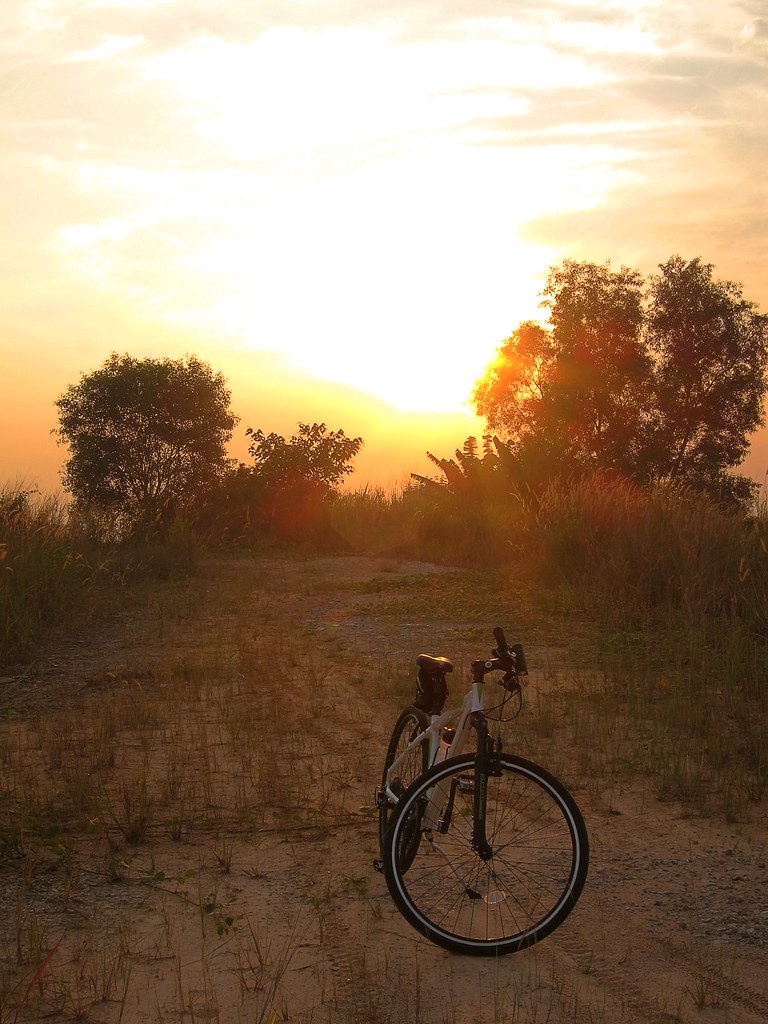
Last weekend I went for a ride on my bicycle around the neighborhood. Since I have my Android phone with me, I activated my SportyPal app to record my ride using the built in GPS. The Canon S90 was the obvious choice as the E-system does not prove to be compact enough for me to carry during the ride.


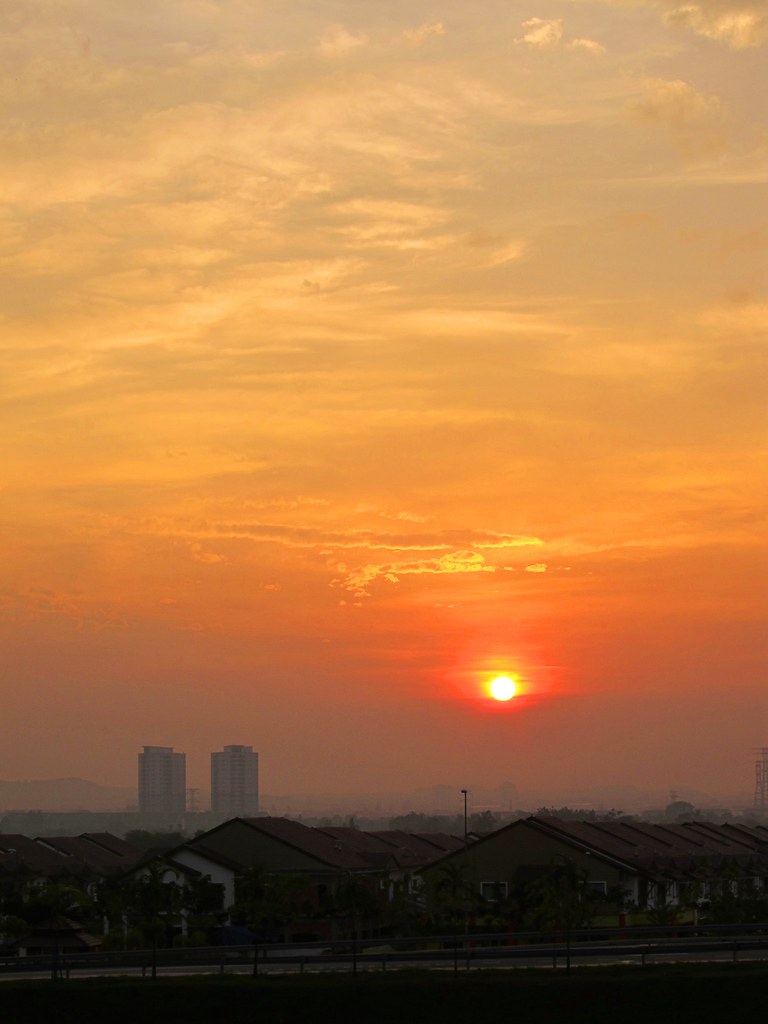
Sunrise over Putra Avenue

My first ride was late in the day, around 6pm. A sunset picture would be nice, along with the 5km ride. About 2km from my house, there was this empty lot with a pond. Apparently the pond was made to capture and hold water during heavy rainfall as means of flood management. The lotus leaves provided a beautiful scene although from the roadside the area looked like ordinary shrubs. A ten-foot walk across the roadside was all it took to see the difference in scenery.

Thirty minutes before sunset, and the sky was still blue

I continued my ride for another 2km on an open field. I was looking for a sunset shot overseeing the power lines. I found out that this kind of shots really put the Canon S90 to the limit. The limited aperture range up to f8 and shutter speed up to 1/1000s really made it difficult to control the sunlight.

Solar energy overpowering fossil fuel, not until 10 years from now


The next morning, the sky was a bit cloudy. Nonetheless, I carried on with my ride. I was eager to capture the sunrise on the other side of the neighborhood. After a 2km ride, I reached this vista point. Actually, the KLCC Twin Towers and KL Tower are visible during clear days.

Sunrise atop Putra Avenue and parts of Puchong

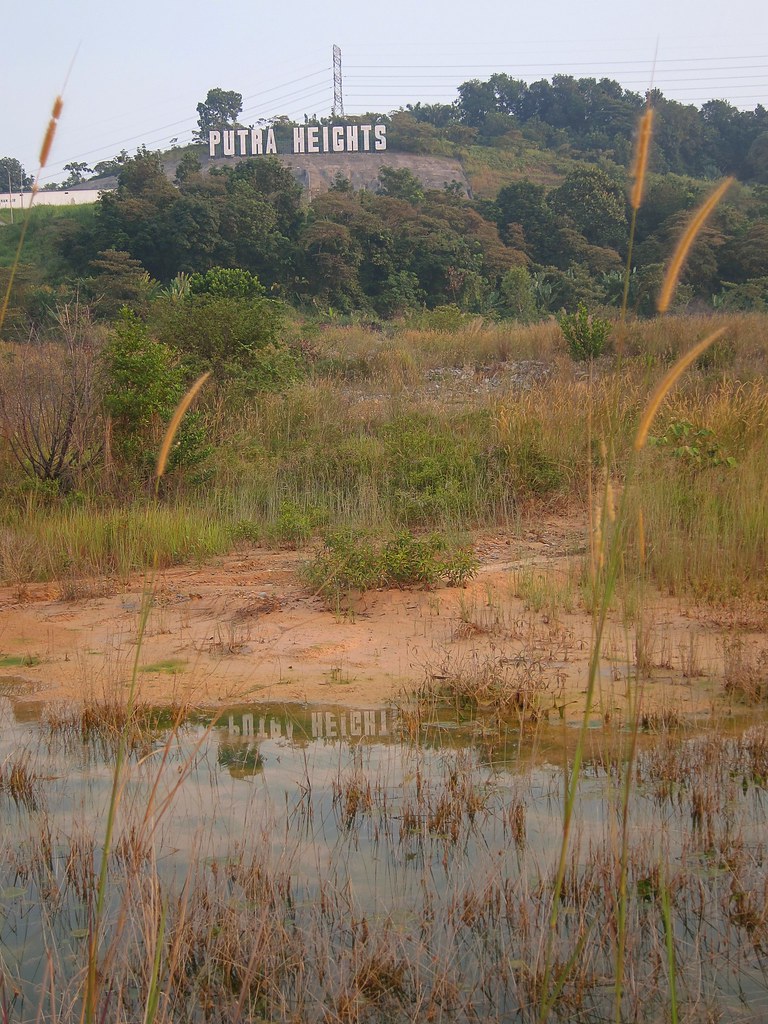
Riding up the rocky hill with my Hybrid bike proved to be okay, but I thought a proper MTB should be the best. Somehow, I managed to go up halfway to the Putra Heights landmark point. That's quite an achievement for a bike made to speed like a Racer and climb like an MTB.

I may need an MTB for this

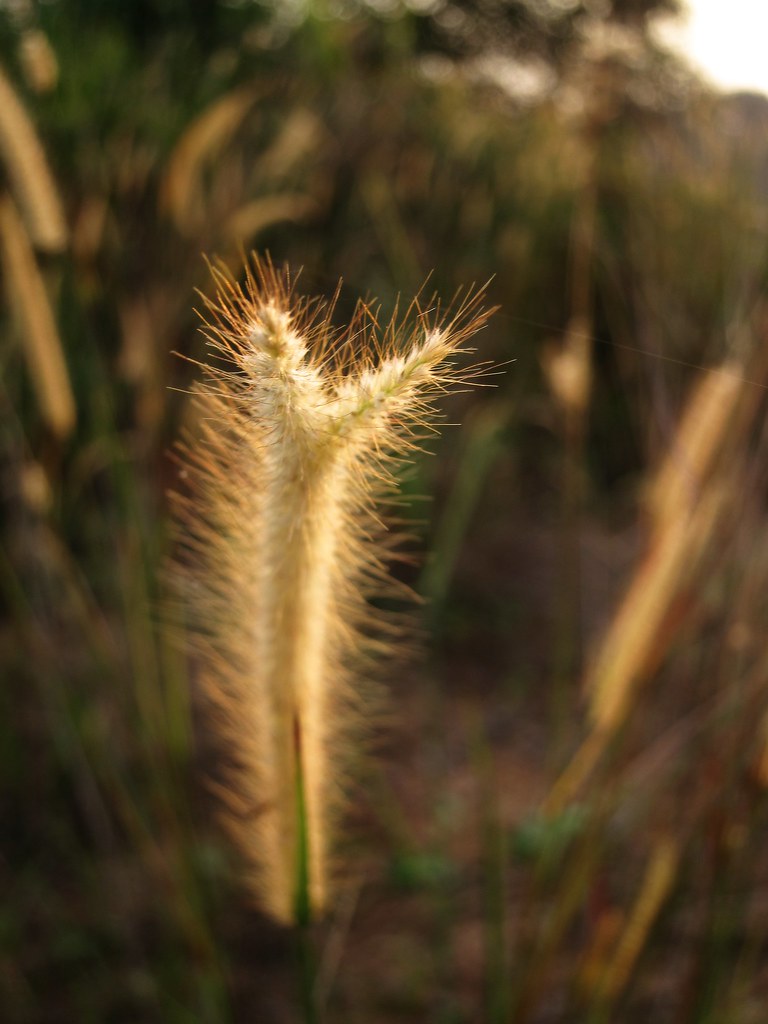
The sunrise had a beautiful glow to the grass, that I took many shots. The S90 had trouble coping with the strong backlight that many pictures did not came up to my satisfactory level.

The split ends were an interesting aspect of this grass

Maybe I will return with a better camera, the E-system for the ride. But I have yet to figure out how to pack the camera effectively for comfort and easy access. For now, the S90 provided some nice images, and I couldn't have been more glad.


Thursday, October 14, 2010

Zuiko and the Orchid Gardens

.


It was the first time I ever set foot at the Kuala Lumpur Orchid & Hibiscus Garden. Since it was on a weekday, I got in for free. During the weekends or special holidays, there is an RM1 entry fee.


I needed some shutter therapy lately. The amount of stress at work is quite high, and a relaxing stroll in the gardens should be good to lessen the strain. It was a bright cloudy day, which in effect, produced the best lighting condition to shoot flower macros. This was a good thing, because for some unknown reason I left my FL-50R flash at home. The soft diffusion by the clouds meant that the sunlight was evenly spread out without any harsh shadows; thus, the need for fill-flash was moot.


The only lens I brought along the E-3 was the Zuiko Digital ED50mm F2.0 macro lens. It proved to be more than enough for me to capture the beauty of the flowers in the gardens.


Upon entry, I was greeted with lush and bright colors of the orchids; white, red orange, purple and even green orchids! The richness of the colors brought in some therapeutic effect to my mind, body and soul. Throughout the entire trip I was immersed in the nature's beauty.


Indeed, such a beautiful creation, the flower is.


And it brought me great relief and satisfaction, too!

Wednesday, October 13, 2010

Zuiko and a Football Legend

.

This picture was taken quite a while back, around June.

Santokh Singh aka Iron Man was one of Malaysian football stalwart in the late 70s early 80s that qualified for 2 Olympic games, Munich 1972 and Moscow 1980 (in which Malaysia boycotted due to the Afghanistan invasion). Malaysia at the time was easily considered among the elite in Asian football (twice 3rd place), and the players at the time included Dato' Soh Chin Aun (Towkay), Jamal Nasir, James Wong, the late R. Arumugam (Spiderman) and the late Mokhtar Dahari (Super Mokh).

I remembered watching them on the small black & white TV screen chasing the white speck of a ball. Yes, resolution was non-existent compared to the 720p resolution we have on Astro TV nowadays! I was merely 7 or 8 years old at the time, and was very proud of them. Those were the time when it was proud to play football. (Eventually I changed sports code to Union Rugby in my teenage years after experiencing the football grassroots politics at school level that may be one of the actual cause of the pitfall of Malaysian football now).


E-30 with Zuiko Digital ED35-100mm F2.0
100mm, f/2.8, 1/200s, ISO800, -0.7ev

The talk was short and entertaining. See, this was done in June, when the FIFA World Cup Finals mania was at its peak. And, the spirit of Malaysia Olympic Team 1980 was rejuvenated to rekindle the football glories past. Santokh was a simple chap, and his witty quips made the crowd laugh. When asked to comment on the current football situation, he passed.

I think many of the 1980 Golden Generation wouldn't want to make statements that actually most Malaysians already know. It's a continuous debate among all walks of life on how to cure the Malaysian football disease, and it has been 30 years since! Until now, there's none. I bet cancer and HIV have a better chance of getting a cure than our national football team. For one, there's no way in my lifetime to see Malaysia play a minute of football in the FIFA World Cup Finals. I can guarantee that.

Aaaah.. such a sad state in our football is in.

At least, I learned one thing from Santokh though. One person did ask if he had any advise to the young players to at least bring back some pride or fresh air to the state of our football. Santokh's answer was simple, "Just have the 3D's! Determination, Discipline, Dedication!".

Though, I still remember when Malaysia lost to England 2-4 in June, 1991. That was entertaining football and the Malaysian players actually were at awe with Gary Lineker. Eventually, he scored all goals for England. Hmmmm.... I thought Malaysian football was getting better.... Ohhh Boy, was I wrong. The icing on the cake was the big bribery bust of 1994/95 which hurtled Malaysian football to the Stone Age!